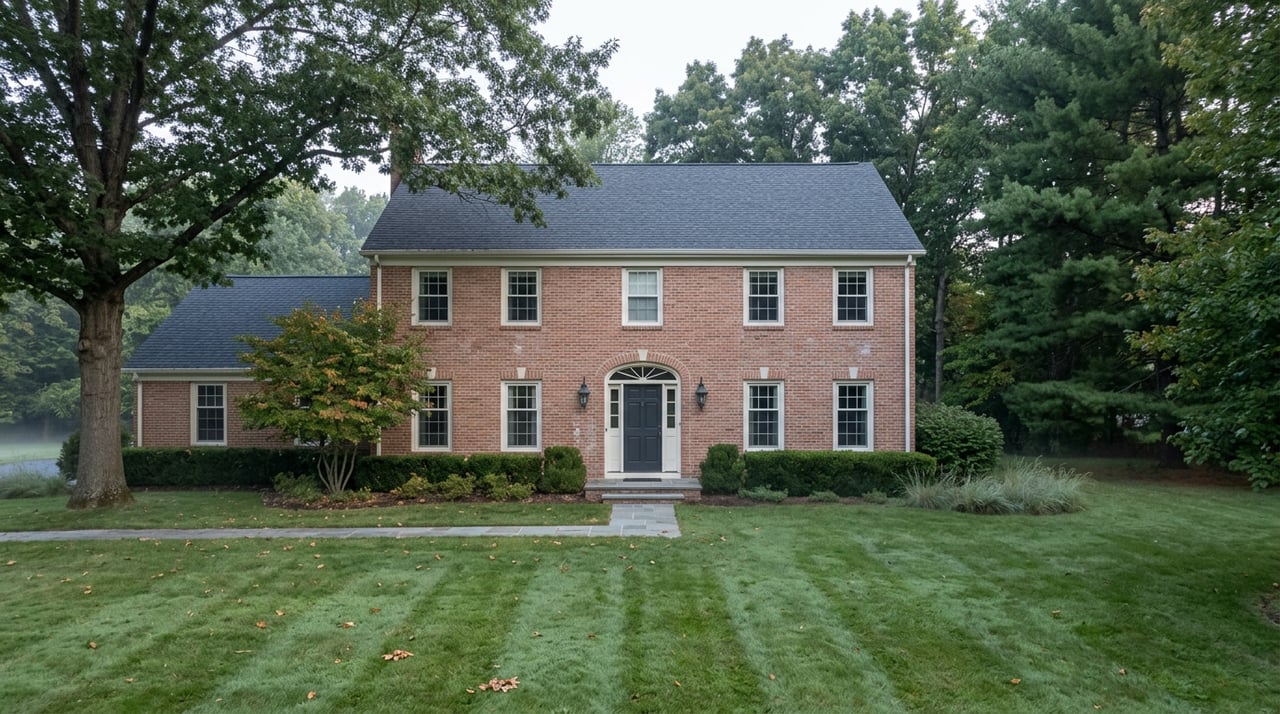
Dover Rezoned Last Fall. The Septic Inspection Still Runs Your Closing Timeline
October 8, 2026
October 8, 2026
Westwood Minute reported that on September 29, 2025, Dover voters approved a multi-family overlay district at a Special Town Meeting, after nearly three years of negotiation, to comply with the state's MBTA Communities Act. It was real. It changed the zoning map. And if you're weighing a purchase in Dover right now, it almost certainly does not change anything about how your deal will actually go.
That gap between the headline and the paperwork is the story worth understanding before you write an offer.
Dover doesn't have its own MBTA stop, but it abuts towns that do, which classified it as an "Adjacent Small Town" under Section 3A of the state zoning act. That status came with a deadline: establish a compliant multi-family district by the end of 2025 or risk losing state grant money. Town officials put real numbers on what was at stake. Dover receives roughly $1.3 million a year in state grants, and a $13 million earmark for replacing the Center Street Bridge was also on the table. A Select Board member told the Special Town Meeting that losing the grants alone would add about $600 a year to the tax bill of a median-valued Dover home, with the bridge earmark adding another $425 on top of that if it went too.
Voters approved the overlay. According to the Town of Dover's MBTA Communities page, the district allows for a minimum of 102 units at 15 units per acre, layered onto existing parcels like County Court and The Meadows, which already had 56 and 24 units respectively before the vote.
Here's the part that matters if you're shopping single-family homes in Dover: In a report for Hometown Weekly, Planning Board Chair Carol Lisbon said:
"It should be noted that the MBTA Communities Act does NOT require that multifamily housing, in fact, be built; does NOT compel Dover to pay for or approve new infrastructure like sewer or water; and does NOT supersede or override Dover wetlands or Title V laws or any of Dover's general bylaws or regulations."
Read that last clause again. The law that just reshaped Dover's zoning map explicitly does not touch Title V, the state septic code that governs how nearly every home in town processes its own wastewater. For a buyer looking at a single-family lot in Dover, the town's zoning code sets minimum lot sizes of a half acre, one acre, or two acres in the R, R-1, or R-2 districts, depending on where you are in town, so the overlay is background noise. The system in your basement, or the one on your future lot, still answers to the same rules it did before the vote.
Dover is one of a handful of towns in the Boston area, alongside Sudbury, Wayland, and Hopkinton, where private septic is still the default rather than the exception. That means Title V isn't a formality you clear in the background. It's a scheduling problem you need to plan around from the day you decide to sell.
Massachusetts state law requires a passing Title V inspection before a septic-served property can change hands. Dover's Board of Health has built its own layer on top of the state code, and the details are worth knowing before you list:
None of this is unique to Dover in spirit. Every Massachusetts town with septic-dependent housing stock operates under Title V. What's specific to Dover is that its Board of Health chose to tighten several of the timing and documentation requirements beyond the state minimum, which means a Dover Title V inspection can take longer to schedule and clear than the same inspection in a town that hasn't added its own layer.
A Title V inspection itself is a modest expense, generally in the low hundreds of dollars, and routine pumping runs less than that. The number that changes the conversation is what happens if the system doesn't pass. Statewide sources on Title V compliance put full septic system replacement costs anywhere from the low five figures for a straightforward system up to $40,000 or more for a site that needs an engineered redesign, additional soil testing, and a new leach field. If you're buying an older Dover property, especially one with a system installed before 1996, that repair math should be part of your offer strategy, not a surprise during the inspection period.
The other detail worth knowing is timing. A passing Title V report is valid for two years. It stretches to three years if the seller can document annual pumping on or before the anniversary of the original inspection. If you're the seller and your last inspection is closer to two years old with no pumping records to show, budget time for a fresh inspection rather than assuming the old one still covers you.
Given Dover's 45-day submission window, the practical advice is straightforward: if you're planning to list, order the Title V inspection before you pick a listing date, not after you have an offer in hand.
If you've looked at recent sales figures for Dover, you've probably noticed they don't sit still. Closed-sale data through 2026 has shown the town's median swinging from under $1.8 million to nearly $3 million depending on the month, and sales counts that are genuinely tiny by suburban standards. Some months see fewer than five closings town-wide. A single month in mid-2026 saw just over twenty transactions, more than four times a slower month the same year.
That volatility isn't a sign of an unstable market. It's what happens when a town has this few transactions and this much variation in what's actually being sold. A 1968-built colonial on a one-acre lot with an older septic system and a new-construction estate on four acres with a modern system can both be labeled "Dover single family" in the data, and their price tags have almost nothing in common. Add in the fact that some of these properties carry engineered septic systems designed for larger bedroom counts, and the story a median price tells is less about appreciation or decline and more about which handful of houses happened to close that particular month.
For a buyer, that means the town-wide median is close to useless as a benchmark. What matters is the specific lot, the specific system, and how recently that system was inspected. For a seller, it means your home's condition and paperwork do more to set your price than whatever the last comparable sale suggests.
The zoning vote was the story that made the news. The septic report is the story that decides whether your closing happens on schedule. If you're a seller, get your Title V inspection scheduled well ahead of your target list date, and pull your pumping records so you know whether you're working with a two-year or three-year window. If you're a buyer, ask directly when the system was installed and whether a groundwater determination has ever been done. On a property built before 1996, that single question can tell you more about your closing timeline than anything on the listing sheet.
Working through the specifics of a Dover property, whether it's a Title V timeline, a renovation with septic implications, or simply understanding what a given lot can support, is exactly the kind of groundwork that benefits from someone who has spent years in these transactions. Francis Curran works with buyers and sellers across Dover and the surrounding towns and can walk through what a specific property's septic history means for your timeline before you're under contract. Reach out through the contact page or start with a home valuation if you're weighing whether now is the right time to list.
Does the new MBTA overlay affect the value of a single-family home elsewhere in Dover? The overlay applies to specific parcels identified for multi-family development, not to the town's single-family zoning districts generally. For most homeowners outside those parcels, the overlay doesn't change zoning, use, or septic obligations on their own property.
My system was installed in the 1980s. Does that automatically mean it fails? Not automatically, but it does trigger the additional groundwater and mottling evaluation Dover requires for pre-1996 systems. That adds a step to the inspection, not necessarily a failing grade.
How far in advance should I really start the Title V process if I'm selling? Given Dover's 45-day submission requirement to the Board of Health, start the inspection process before you set a list date. If pumping records show your last inspection is close to two years old, plan for a fresh inspection rather than relying on the older one.
This article is general information, not legal, tax or financial advice. Consult a qualified professional about your situation.
Stay up to date on the latest real estate trends.
Providing clients with ultimate bespoke representation, customized marketing strategy, and a culture built on service. Excelling in exceeding expectations for buyers and sellers.
Start the Conversation

692 HIGH STREET WESTWOOD, MA 02090