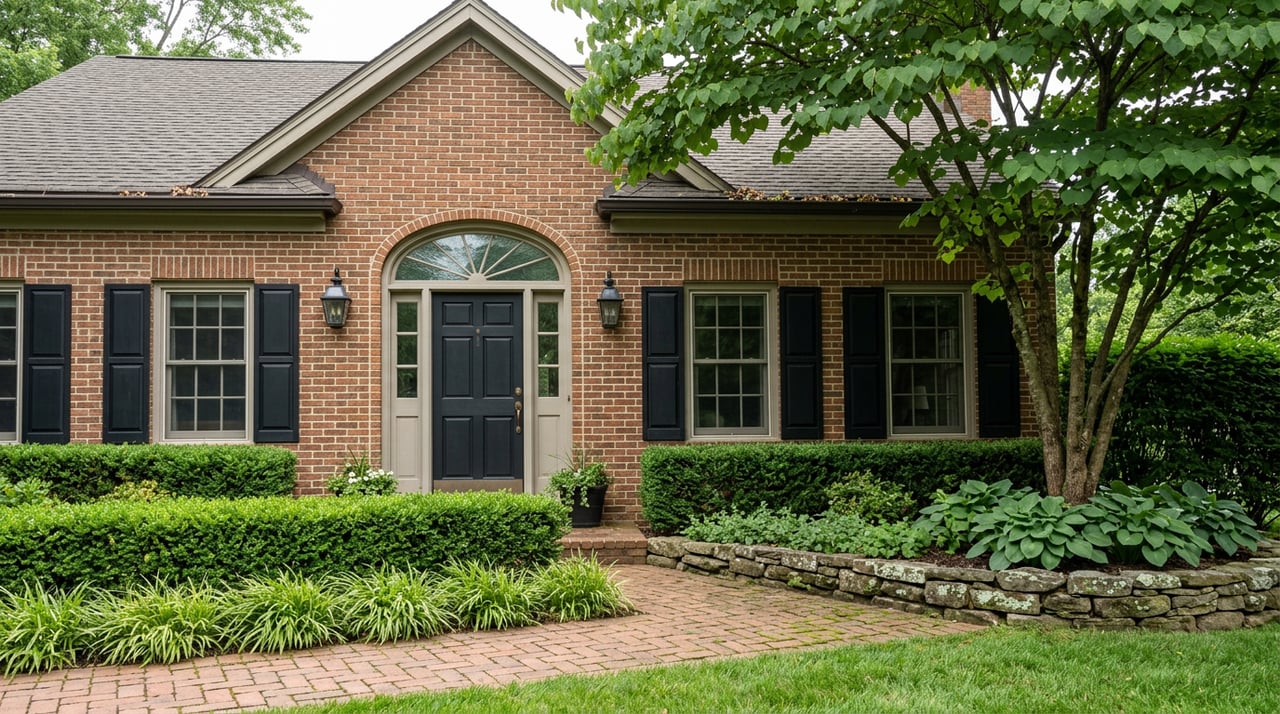
Milton Zoned for 2,461 New Homes. So Far, Three Addresses Have Taken the Offer.
October 15, 2026
October 15, 2026
A buyer touring a colonial near the Central Avenue trolley stop this fall asked her agent a fair question: could the empty lot next door become a twelve-unit building someday? The honest answer is yes, technically, under zoning the town adopted last year. The more useful answer, backed by the town's own numbers, is that almost nobody who could do that is planning to.
Milton spent close to two years as the most-watched holdout in the state's fight over multifamily zoning near transit. Voters rejected a compliance plan in a February 2024 referendum by a margin of 5,115 to 4,346. The Attorney General sued. The case went to the Supreme Judicial Court, which ruled in January 2025 that the law is constitutional and mandatory, though it also found the state's guidelines hadn't been properly adopted and sent them back for a rewrite. According to Mass. Streetsblog, Town Meeting finally approved compliant zoning in June 2025, by a vote of 69 to 31 percent, creating capacity for up to 2,461 multi-family units across six named districts.
That fight is over. What replaces it is a quieter, more practical question for anyone shopping in Milton right now: where exactly did the zoning change, and how much has actually moved because of it?
According to the Town of Milton's warrant articles, the new rules apply inside a Multi-family Overlay District covering roughly 158 acres, split into six named subdistricts, each with its own density rules:
About three-quarters of the town's housing stock remains detached houses. The overlay added a specific set of parcels where multi-family housing is now allowed. The town's GIS mapper shows exactly which lots those are, and it's worth a look before assuming a neighborhood has changed just because it's near a trolley stop.
One legal wrinkle never got resolved. Milton argued in court that the Mattapan Trolley, a light-rail line, shouldn't count as "rapid transit" under the statute the same way a subway does. The SJC left that argument for another day rather than ruling on it.
Before Town Meeting voted, Milton's planning department surveyed property owners inside the proposed districts. The result showed up in the town's own FAQ document:
Results from our MBTA Communities Survey show that 86% of property owners would not be interested in redeveloping their property to be multifamily, nor would they be interested in selling their property for redevelopment.
That's the number that actually predicts what happens next, more than the zoning code does. A zoning map sets a ceiling. It doesn't create a seller. Most of the parcels inside these six districts are occupied, paid-down, mid-century homes whose owners have no financial reason to sell to a builder when the alternative is staying put in a market where their house is appreciating and could just as easily sell to another buyer looking for a single-family home in Milton.
This is the piece that got lost in two years of argument on both sides. Opponents warned the zoning would flood specific streets with triplexes. Supporters hoped it would meaningfully add to the town's housing stock. Both were describing a legal ceiling as if it were a construction pipeline. The town's own survey data says most of the ceiling will sit unused for a long time, not because the law failed, but because the owners who'd have to act on it mostly don't want to.
Concrete activity since the zoning passed has been limited to a handful of specific parcels, not a wave.
A zoning board application was filed in early 2026 for a property at 42 Central Ave, inside the Milton/Central Avenue Station Subdistrict. It's the kind of single filing that, in a town of Milton's size, would barely register as news anywhere else. Here, it's one of the only visible test cases of a district that took two years and a state lawsuit to create.
The most active mover, oddly, has been the town itself. In March 2026, the Select Board put out a request for proposals to sell or lease a town-owned building at 525 Adams Street, near one of Milton's trolley stops. The building dates to 1952 and runs about 1,900 square feet. The town is offering terms as flexible as a 99-year lease, subject to Town Meeting approval, as described in the Select Board's March 2026 meeting packet, and is explicit that any redevelopment should meet a high design standard given the site's visibility. When a municipality has to market its own surplus property to generate interest in redevelopment near a transit stop, that tells you something about how much private appetite exists on its own.
A fourth project, marketed as Residences at East Milton Square, is moving forward under Chapter 40B, the state's long-standing comprehensive permit law that predates the MBTA Communities Act by more than five decades. It's a reminder that some demand for denser housing near Milton's transit stops existed before any of this zoning fight started, and that demand has its own separate legal path to get built.
Two years of statewide attention. Six named districts. Zoned capacity for 2,461 units. As of this fall, the actual paper trail runs to a handful of addresses.
None of the zoning drama has loosened Milton's single-family market. In the three months ending in June 2026, the median sale price in town was roughly $1.0 million, up 3.5 percent from the same period a year earlier, with homes typically going under agreement in about 20 days and selling for close to 5 percent over asking. A separate estimate for the same month put the average home value at $1.11 million, up 2.3 percent year over year, with a similarly fast pace to pending status.
That's not the profile of a market bracing for a supply shock. It's the profile of a town where single-family scarcity, not multi-family zoning, is still setting the price floor. If the overlay districts eventually produce real construction, the effect will likely show up first in the handful of streets inside those six boundaries, not in Milton's broader single-family comparables.
The uncertainty that used to hang over Milton is mostly resolved. A statewide petition to repeal the MBTA Communities Act altogether failed to collect enough certified signatures to make the November 2026 ballot, according to the Secretary of the Commonwealth's office. Milton itself is in compliance, its zoning is adopted, and the legal fight that made national real estate press is closed. Buyers who spent the last two years discounting Milton for political risk don't need to keep doing that.
The practical risk, if you're looking at a house near Central Avenue, Mattapan Station, Eliot Street, East Milton Square, Granite Avenue, or Blue Hills Parkway, is narrower and more specific than the headlines suggested. Check whether the actual parcel next door sits inside the overlay boundary using the town's mapping tool, rather than assuming an entire neighborhood shifted because it's in the same zip code as a trolley stop. And weigh that risk against a market where competitive single-family pricing, not new construction, is still what you're bidding against.
Does this zoning mean my future neighbor's lot could become an apartment building? Only if that specific lot sits inside one of the six named subdistricts, and only if the owner chooses to redevelop. The town's own survey found the large majority of owners inside those districts have no plans to.
Is the political fight over the law really finished? The compliance fight is. Milton adopted qualifying zoning in June 2025, and a statewide repeal effort didn't gather enough signatures for the 2026 ballot. One narrow legal question, whether the Mattapan Trolley should count as rapid transit under the statute, was never actually decided by the courts.
Where can I check if a specific property is inside the overlay district? The Town of Milton maintains a GIS mapper showing the exact boundaries of each subdistrict, which is worth checking before assuming a property's zoning has changed.
If you're weighing a purchase near one of these districts, or trying to understand what a specific parcel's zoning actually permits before you make an offer, Francis Curran has spent decades reading Greater Boston's suburban markets down to the lot line. Reach out through the contact page to talk through what a property's zoning and location really mean for its value, or browse neighborhood profiles across Milton and the rest of the South Shore.
This article is general information, not legal, tax or financial advice. Consult a qualified professional about your situation.
Stay up to date on the latest real estate trends.

Providing clients with ultimate bespoke representation, customized marketing strategy, and a culture built on service. Excelling in exceeding expectations for buyers and sellers.
Start the Conversation

692 HIGH STREET WESTWOOD, MA 02090